
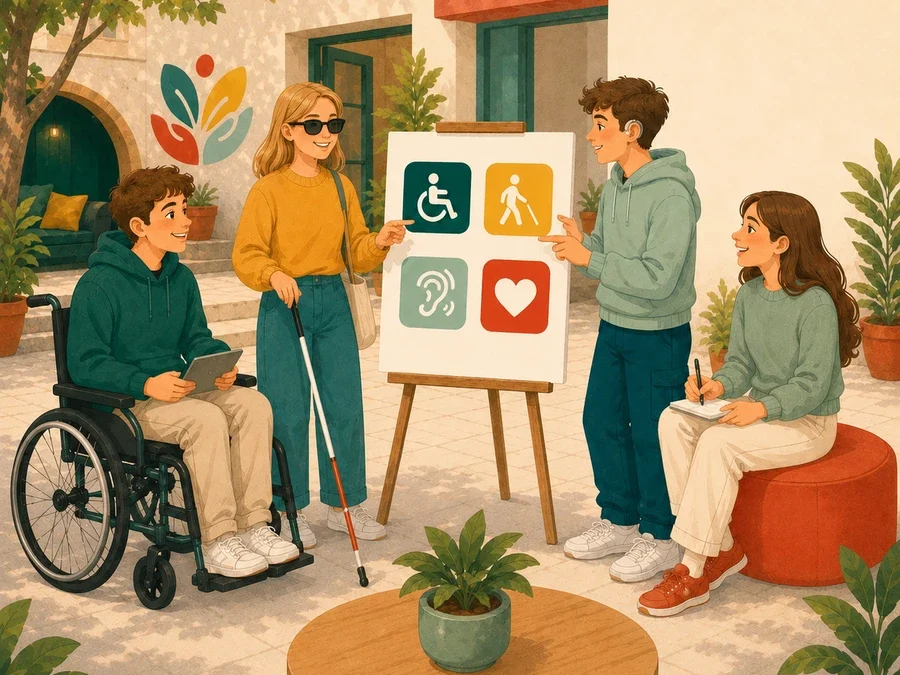
Understanding the target group and accessibility needs helps youth workers look beyond first impressions, labels or visible disabilities. The course shows that accessibility needs can be physical, sensory, cognitive, psychological, social or environmental, and that many barriers remain hidden behind NEET status, rural isolation, family overprotection, stigma or undiagnosed difficulties. It also introduces behaviour as communication, helping youth workers respond with curiosity instead of judgement, recognise overlapping barriers, and make practical adjustments that support safer and more meaningful participation.
Course Content
1. Adolescence and transition
You don't currently have access to this content
2. Seeing the individual
You don't currently have access to this content
3. Invisible barriers and hidden needs
You don't currently have access to this content
4. The most common backgrounds for additional support needs
You don't currently have access to this content
5. Intersectionality and complex situations
You don't currently have access to this content
6. Behaviour as communication
You don't currently have access to this content
Test your knowledge at the end of the second course: Understanding the target group and accessibility needs
You don't currently have access to this content